Our Bio Drain System Uses Green Biotechnology
Environmental biotechnology is the branch of biotechnology that addresses environmental problems such as the removal of pollution, renewable energy generation or biomass production by exploiting biological processes – in our case, microbiology.
We use living, ‘friendly’ bacteria for a number of tasks including saving water in waterless urinals and remediating waste but a mainstay of our business is digesting FOGs discharged by food businesses. To put it simply, hungry (but harmeless) bacteria are automatically dosed into the kitchen greasetrap / drain system each night to digest FOGs.
They digest FOGs by releasing natural catalysts called enzymes. Because bacteria are simple, single-celled organisms they don’t have a digestive tract like we do. They need to break down any potential food source around them until it’s small enough to absorb through their cell walls.
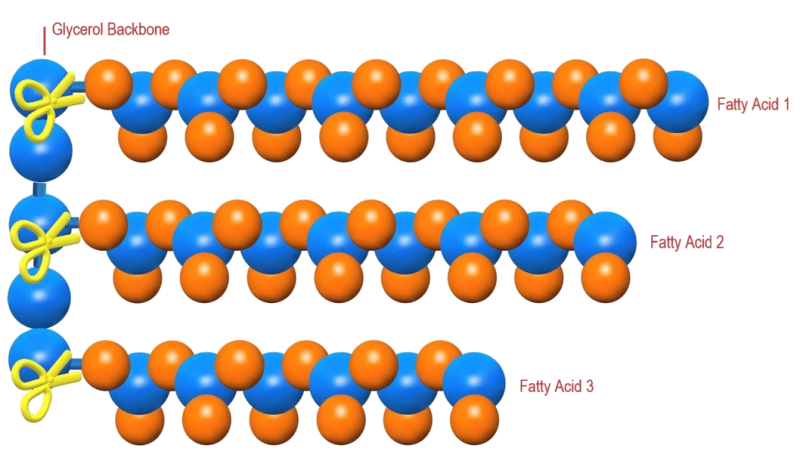
Pretty much all animal and vegetable fats are triglycerides – three fatty acids (of varying length) attached to a glycerol ‘backbone’. The microbes in biological products produce enzymes to cleave the fatty acids from the glycerol backbone – so they can use them as food. Here’s how it works:
Most animal and vegetable fats are triglycerides – three fatty acids (of varying length) attached to a glycerol ‘backbone’. The microbes in biological products produce enzymes to cleave the fatty acids from the glycerol backbone – so they can use them as food.
The glycerol and fatty acids are water-soluble and small enough to pass through the bacterial cell wall.
But an important point is that they cannot recombine and turn back into fat – that breaks the laws of chemistry – so a biological system actually digests fats rather than just emulsifying them (as a detergent would) so they can cause trouble further down the line.
Over time the grease-digesting bacteria will work their way up and around the inside of the pipe forming a ‘biofilm’ – a microbial city – preventing FOGs causing blockages.
A properly set-up biological system is incredibly effective at its job; far more so than anything that can be accomplished with toxic chemicals. This is because the bacteria we choose have evolved over billions of years (about 3.8 billion according to evolutionary biologists) so they’ve had plenty of time to become very efficient.